Raised Salt Painting
Discover the magic of raised salt painting! Raised salt painting is a hands-on art experience that blends drawing, texture, and color. In this tutorial, participants will learn to create designs using glue and salt, then bring them to life with liquid watercolors that travel effortlessly along the raised lines. The process invites curiosity and experimentation as colors spread, blend, and interact in unexpected ways, making each artwork truly one of a kind. Perfect for artists of all ages and skill levels, raised salt painting emphasizes creative exploration over perfection and offers a satisfying blend of chance and visual impact.


Materials:
– Cardstock
– Bottle of white glue
– Table salt
– Shallow dish or tray to work on
– Liquid watercolors
– Paint brushes
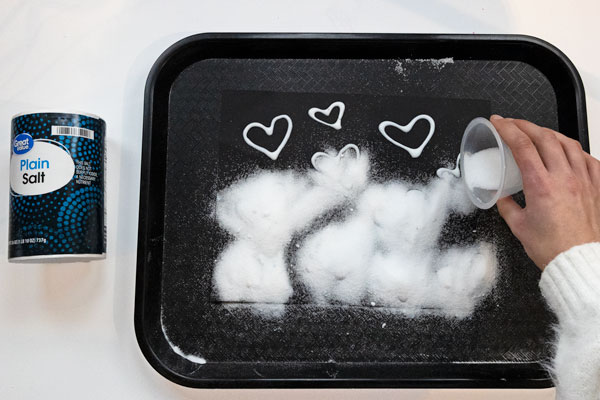
Step 1: Create Your Glue Design. Begin by placing your cardstock flat on the work surface. Using liquid glue, squeeze or draw a design directly onto the cardstock. Lines can be straight, curved, abstract, or representational (such as shapes, patterns, or simple images). Be sure to apply the glue slowly and steadily, squeezing so the glue lines remain raised and continuous. Thicker glue lines will create a stronger raised effect.
Step 2: Apply the Salt. While the glue is still wet, generously sprinkle salt over the entire surface of the glued design. Make sure all glue lines are fully covered. Gently tilt or tap the cardstock so the excess salt falls away. Using a baking dish or tray underneath will help contain the salt and allow it to be reused.
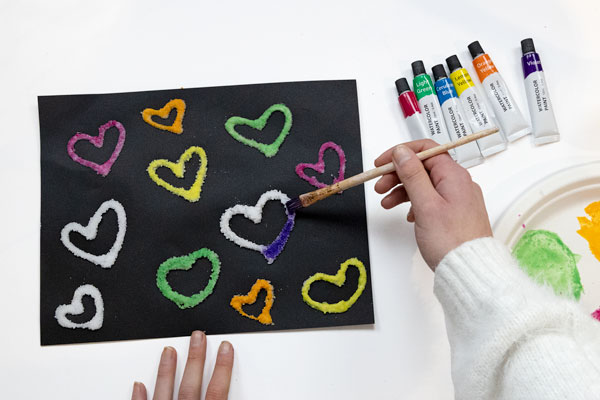
Step 3: Add Color. Dip a clean paintbrush into liquid watercolor paint. Lightly touch the tip of the brush to the salt-covered glue lines. Do not brush or drag. The color will automatically travel along the salted glue, spreading in both directions through capillary action. You may add multiple colors, allowing them to blend naturally where they meet.
Step 4: Observe the Effect. Take a moment to watch how the watercolor moves through the salt and glue. This technique emphasizes process, chance, and experimentation, so each artwork will be unique.
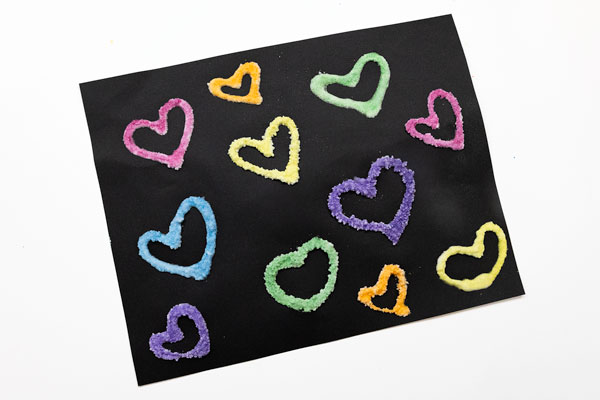
Step 5: Allow to Dry Completely. Set the artwork aside on a flat surface and allow it to dry thoroughly. Drying time may take 24–48 hours, depending on the thickness of the glue and the amount of watercolor used. Once dry, the salt will remain textured, and the colors will be set.
Get creative with variations!
Create a 3D sculpture: Take raised salt painting beyond the flat surface by experimenting with scale, materials, and form. Try creating your designs on sturdy cardboard panels instead of cardstock to add durability and structure. Once dry, these panels can be cut, folded, or assembled to construct a three-dimensional sculpture, such as a freestanding form, abstract structure, or relief-style installation. Panels can be connected using tabs, slots, or glue, allowing the painted surfaces to interact from multiple angles. This variation encourages artists to think spatially, explore how color and texture behave in three dimensions, and consider how individual painted elements can come together to form a cohesive sculptural work.
Cardboard Sculptures – A Family Art Workshop
Further Learning and Discussion Questions:
Discussion questions for reflection
- How did the salt and watercolor interact differently from traditional brush painting, and what surprised you most about the way the colors moved?
- In what ways did chance or unpredictability play a role in your final artwork, and how did you respond to those moments as an artist?
- How did your choice of line, shape, or pattern affect the flow of color and the overall visual impact of your piece?
- If you transformed your painted panels into a three-dimensional sculpture, how did viewing the work from multiple angles change your understanding of the artwork?
- How might this process influence the way you think about control versus experimentation in future art-making experiences?
Further Learning
Sigalit Landau: An Artist Who Uses Salt
Sigalit Landau is an internationally recognized Israeli contemporary artist whose practice explores transformation, materiality, and natural processes using salt as both a medium and collaborator. In her long-running Dead Sea Projects, Landau submerges everyday objects such as clothing, bicycles, and metal frames into the hypersaline waters of the Dead Sea, where they slowly become encrusted with salt crystals over weeks or months. The resulting sculptures, captured through photography and installation, reveal how salt’s natural forces can completely alter form and surface, turning familiar items into unexpected, crystalline artworks. For example, in her “Salt Bride” series, a black dress submerged in the Dead Sea becomes a shimmering salt-white sculpture through this process of crystallization, highlighting how environmental materiality can shape artistic expression.
https://www.sigalitlandau.com/salt