Moving Winged Bugs
Bring your insect creations to life in this playful Family Art Workshop! In this activity, young artists will design and construct a movable paper bug, such as a ladybug, beetle, bee, or dragonfly, using simple materials like colored cardstock, scissors, and glue. By folding and assembling a specially designed paper strip, participants create a clever mechanism that allows their bug’s wings to open and close, transforming the insect from a resting position into a flying stance. Along the way, artists can decorate their bugs with patterns, antennae, and googly eyes while also learning a bit about insect anatomy and movement. This hands-on project combines creativity, simple engineering, and observation of nature to make a bug that really moves.
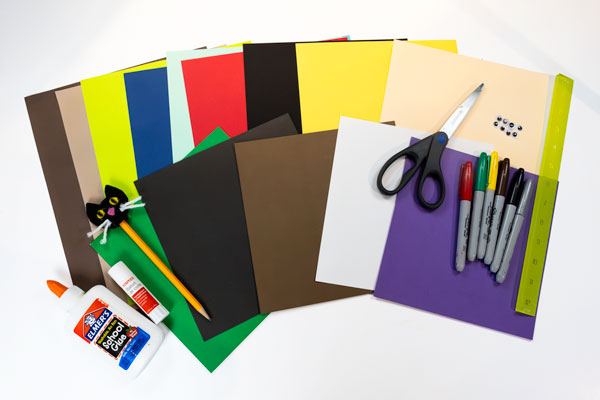
Materials:
- Colored Cardstock Papers
- Pencil
- Craft Glue
- Scissors
- Ruler
- Sharpies
- Googly Eyes
Step 1: Draw & Cut Out the Components of Your Bug(s).

Ladybug
Elytra (the hard wing covers): On red cardstock, draw a large, rounded oval and cut it in half.
Head: On black cardstock, draw a smaller circle and cut it in half. Save one-half.
Wings: On cream cardstock, draw two long teardrop shapes.
Abdomen: Draw an oval shape onto yellow or cream cardstock. Cut two diagonal pieces off the top of the oval.
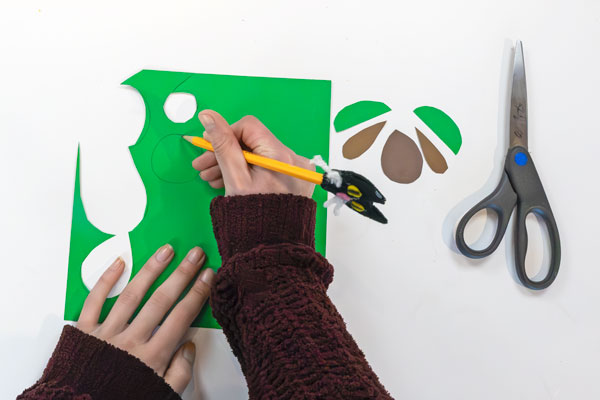
Beetle
Hard Wing Covers: On green cardstock, draw a large, rounded oval and cut it in half.
Head: On green cardstock, draw a smaller circle and cut it in half. Save one-half.
Wings: On light brown cardstock, draw two long teardrop shapes.
Abdomen: Draw an oval shape on dark brown cardstock. Cut two diagonal pieces off the top of the oval.

Bee
Abdomen: Draw an oval shape onto yellow cardstock. Cut two diagonal pieces off of the top and bottom.
Wings: Draw two large and two small teardrop shapes onto white cardstock.
Head: On black cardstock, draw a smaller circle and cut it in half. Save one-half. (use the other half from the ladybug)
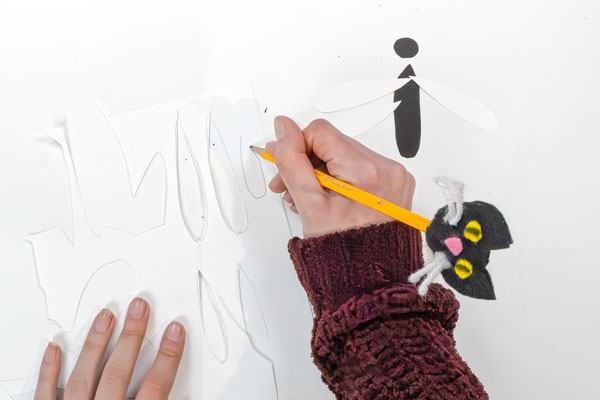
Dragonfly
Wings: Draw two large and two slightly smaller long teardrop shapes onto white cardstock.
Abdomen: Draw a long, thin oval shape onto black cardstock. Cut diagonal pieces from the top and bottom.
Head: Draw a small circle onto black cardstock
Step 2: Creating Your Strip(s).
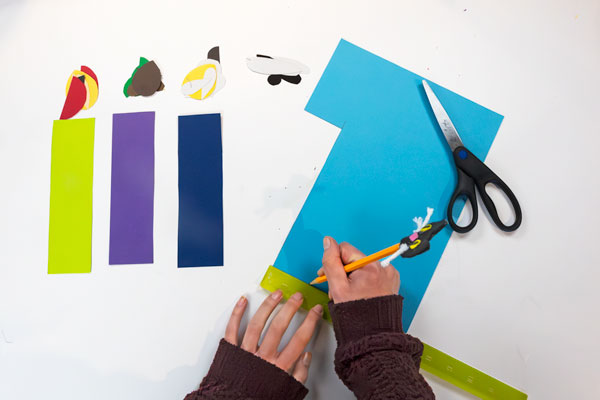
Once all of your pieces are cut out, create the strip that allows your bug(s) to move. Cut a strip of cardstock that is 2” x 7”. I am using green cardstock for the ladybug, purple for the beetle, dark blue for the bee, and light blue for the dragonfly.
Step 3: Folding Your Strip(s).
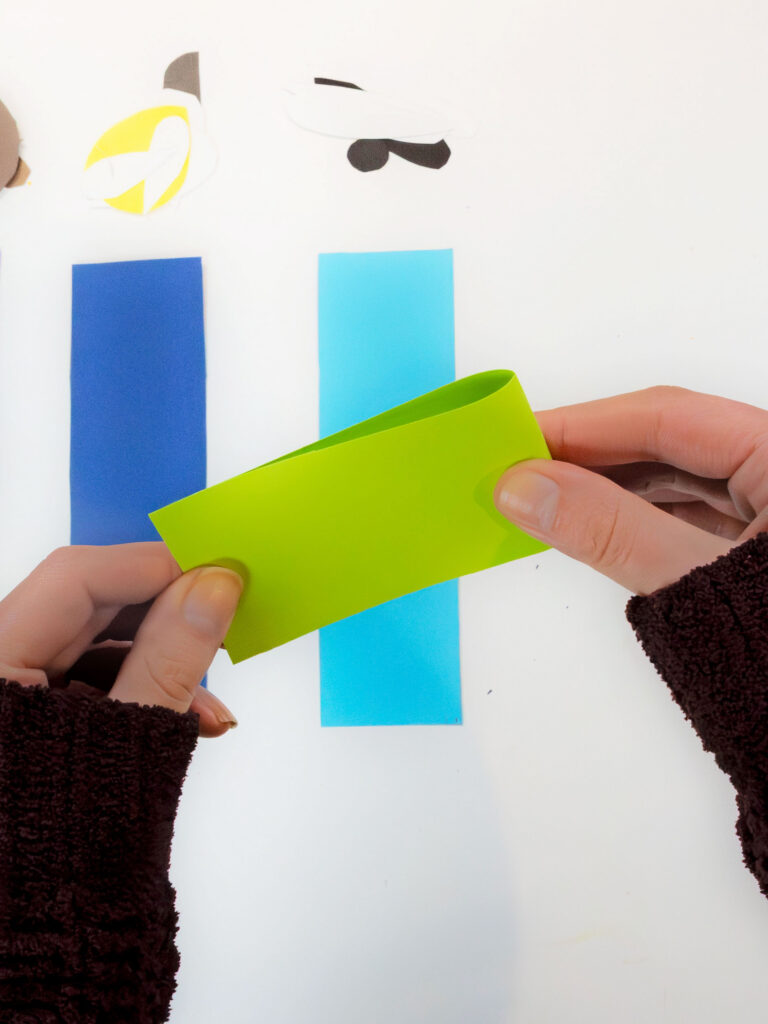
1. Fold the strip in half, lengthwise.
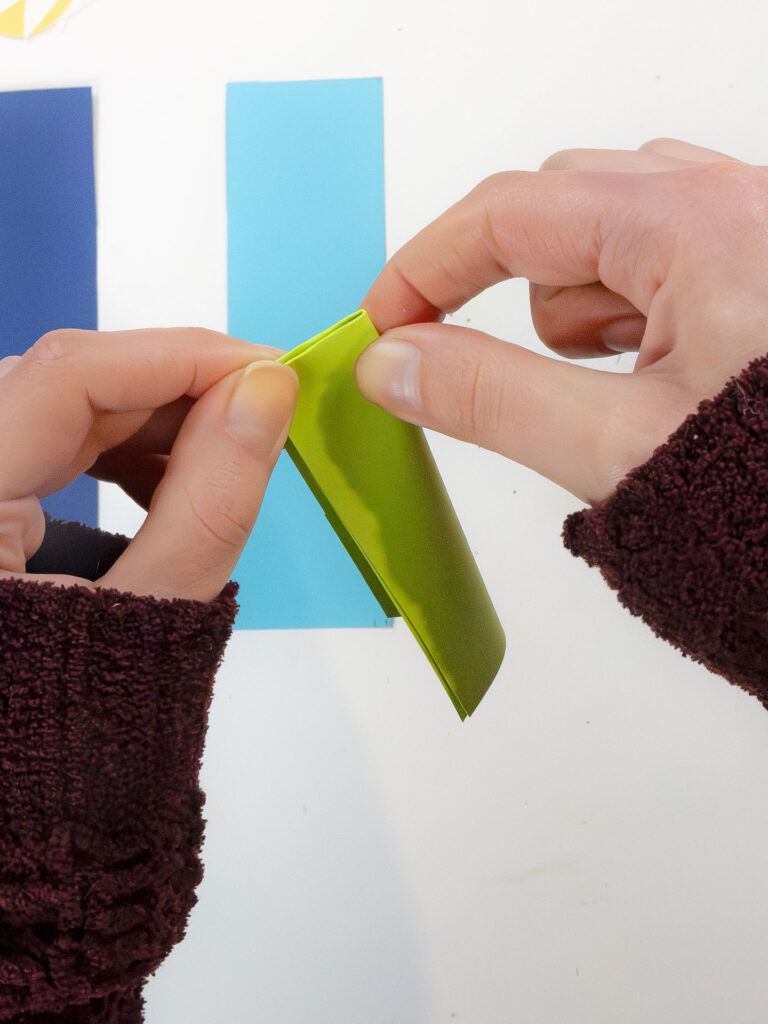
2. Then, fold the closed end (the folded end) of the folded strip from right to left to mark the middle point with a small crease. Do not fold the entire strip in half. Just make a small crease at the top.
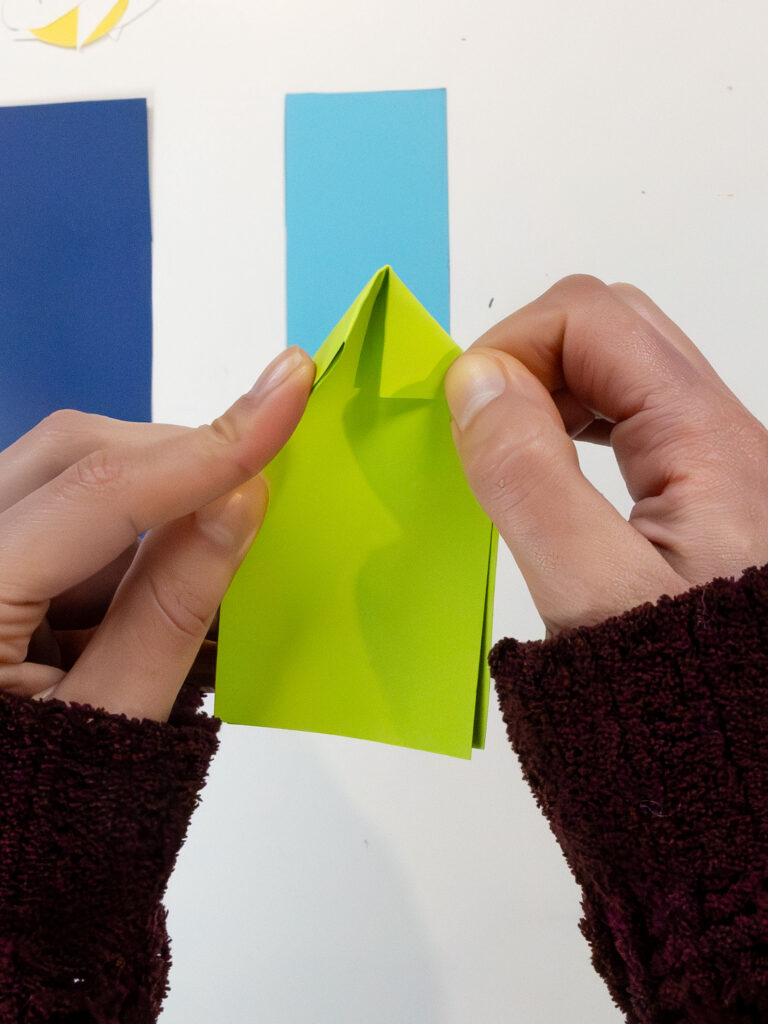
3. Next, fold the right corner of the closed end down to meet the marked middle crease. This is similar to making an earmark in a book. Fold the left side to match.
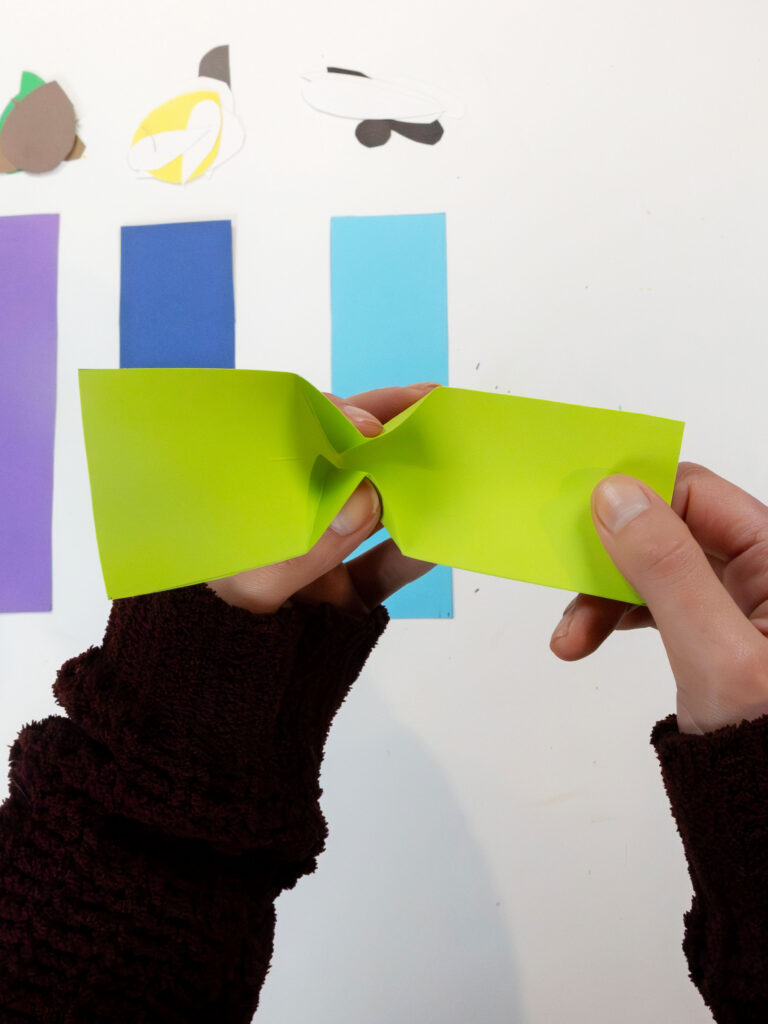
4. Unfold your strip. You should see creases. Pinch the center side folds inwards and towards each other.
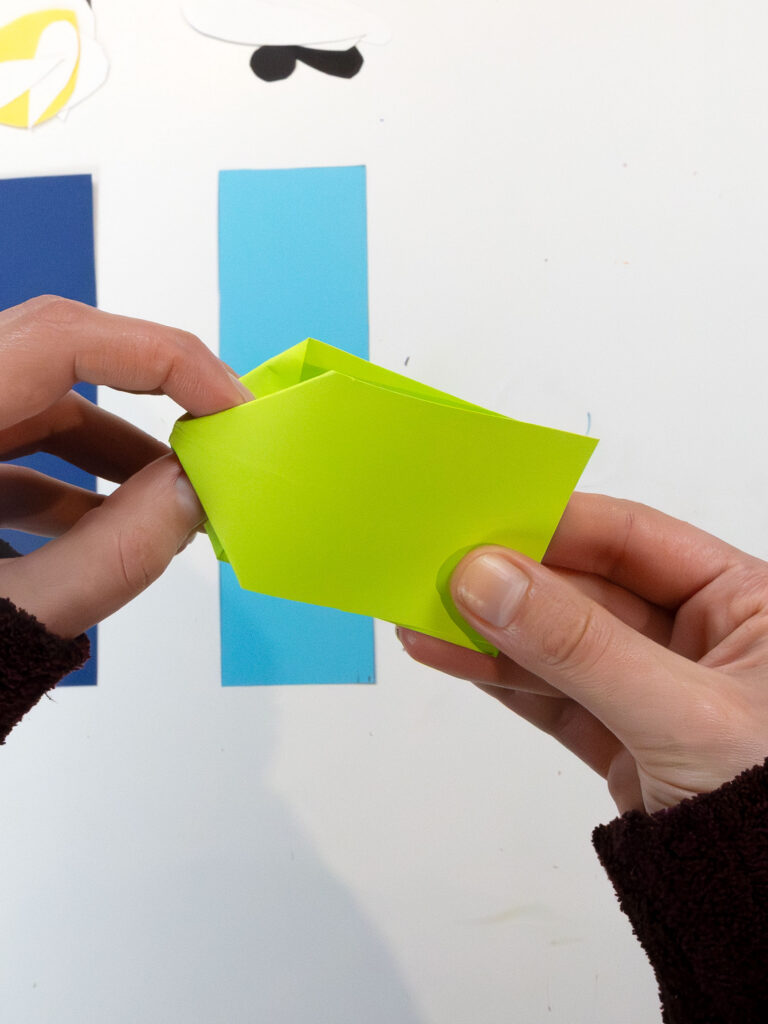
5. Guide the top edge of your strip to the bottom edge while still pinching the sides.
Hold the top and bottom edge together and unpinch the sides. Smooth and flatten your strip so that your sides are folded inwards in between the front and back of the strip. The top of your folded strip should form a point at the center.

6. Unfold the entire strip. All of your folding should have created four triangle-shaped creases. Two on the right side and two on the left.
Look at the top points of the top two triangles at the left and right side of the strip respectively. Fold the top of the strip backwards, using these points as your guide, to create a horizontal crease that connects the two points together.
Step 4: Attaching the Components of Your Bugs(s).

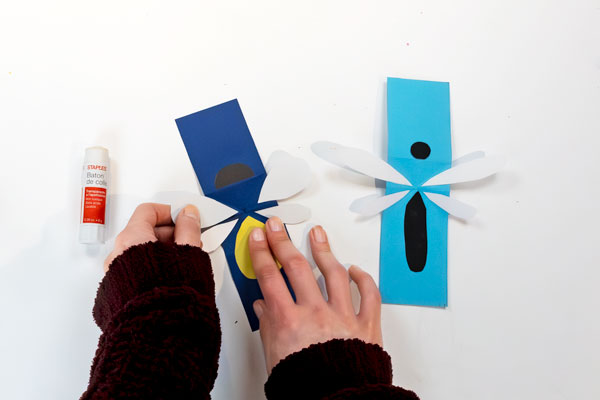
- Apply a small amount of glue to the pointed tip of one of your smaller wings and place it inside of the bottom left triangle. Repeat with the second wing, placing it inside of the bottom right triangle.
- Attach the outer wing covers in the same manner to the top two triangles, making sure that the long, straight side is facing downwards.
- Apply glue to the entirety of the abdomen and place it where the bottom two triangles meet in the center of the strip.
- Also apply glue to the entire head piece and place it with the straight edge facing downwards near the top horizontal crease.
All bugs featured in this workshop are constructed in the same manner, just replace the outer wing covers of the ladybug and beetle with the larger set of wings for the bee and dragonfly.
Step 5: Folding Your Paper Bug.
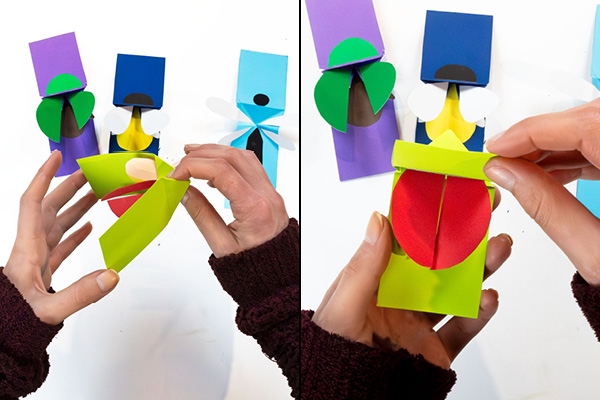
- Once the glue is dry, press where your top and bottom triangles meet inwards, gently guiding your top covers or wings downwards until your strip is once again folded in half lengthwise.
- Flip the top of your strip up utilizing the top horizontal crease that you created earlier so that the head is above the outer covers or top set of wings.
- Adjust the positions of your pieces if needed.
Step 6: Decorating.
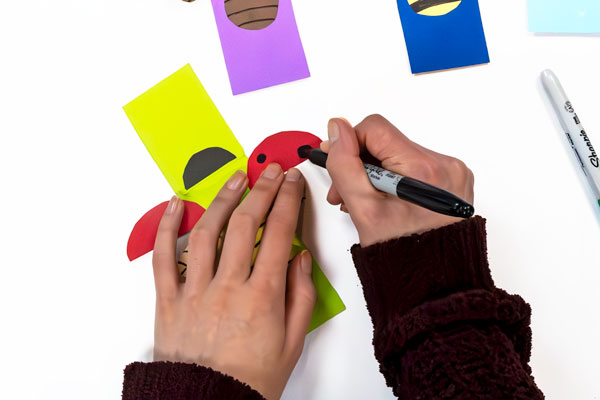
Use Sharpies to decorate and add other features to your bug(s). You can also add color to the spaces between your pieces and the creases of the strip.
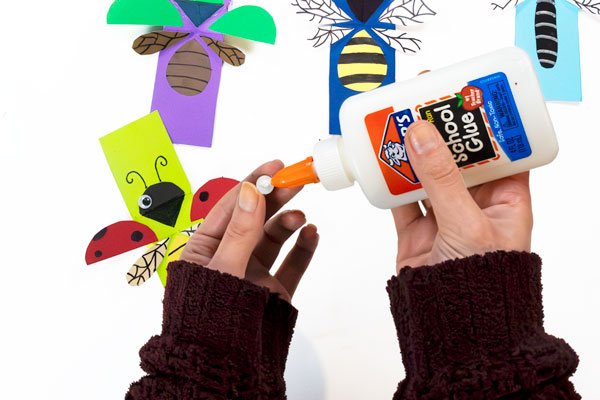
To add googly eyes, add glue to the back of each eye and attach them to the head piece.
Step 7: Transform Your Bug(s) from a Resting Position into a Flying Stance.
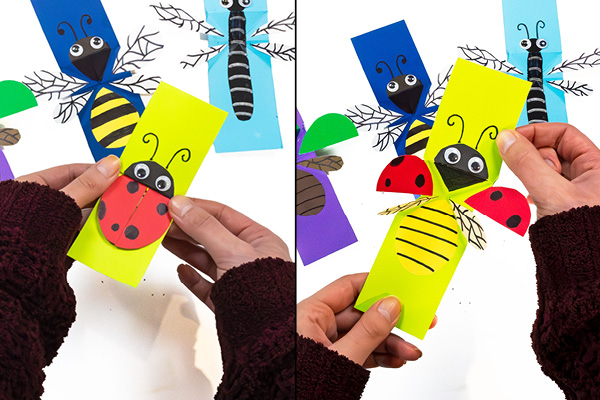
Once you are done decorating and the eyes have dried, hold the bottom of the strip with one hand and the top of the strip with the other. Gently pull the top of the strip upwards, which will expand your bug into a flying stance with all of the covers and wings spread out. Move the top of the strip downwards to return your bug to its resting position.

Ideas to take movable bugs to the next level:
- Habitat Integration: Build a living environment and expand the single object into a mini ecosystem artwork. Create a 3D habitat for the insect. Use leaves, flowers, tree bark, etc. Use this to encourage storytelling: Is the insect pollinating? Hiding? Hunting?
- Light + Transparency Exploration (Material Innovation): Push material use beyond cardstock by introducing translucency and light interaction. Replace or layer wings with tissue paper, vellum, and recycled plastic (like clear packaging). Add details using sharpie to mimic real wing veining. Test the bug in different lighting: Hold it up to a window or shine a flashlight through it.
Further Learning and Discussion Questions:
- Learn about ladybug anatomy by visiting Animal Corner: https://animalcorner.org/ladybird-anatomy/
- Learn ladybug facts at National Geographic Kids: https://kids.nationalgeographic.com/animals/invertebrates/facts/ladybug
- Learn about the Giant Darner Dragonfly: https://www.nwf.org/Educational-Resources/Wildlife-Guide/Invertebrates/Giant-Darner-Dragonfly
Discussion Questions:
- Dragonflies can fly in multiple directions—how might you redesign your mechanism to reflect that movement?
- How did you decide which insect to create, and what choices did you make to represent it?
- What was the most important design decision you made (shape, color, size, movement)? Why?
- Did your idea change as you worked? What caused that change?