

Lindsy R. Parrott is the executive director and curator of The Neustadt Collection of Tiffany Glass. During her twenty-three year tenure at The Neustadt, Lindsy has conducted groundbreaking research on the manufacture and use of Tiffany’s opalescent flat glass, which has been published in numerous journal articles and exhibition catalogues. She has further developed The Neustadt’s partnership with the Queens Museum, which now houses a permanent gallery dedicated to changing exhibitions drawn from The Neustadt’s collection. In addition, Lindsy has curated traveling exhibitions exploring a variety of Tiffany topics, such as his translation of nature into glass, how his lamps were fabricated, and the aesthetic effects of changing lighting technology at the turn of the century. These exhibitions have been enjoyed by more than half a million people at museums across the country, including the Cincinnati Art Museum, Winterthur Museum, the Chrysler Museum of Art, and the Biltmore Estate.
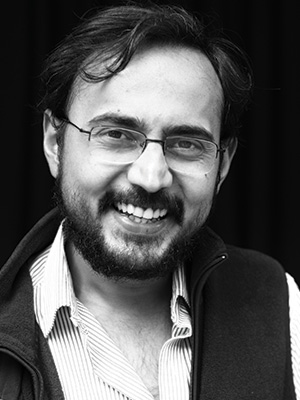
Mudit Trivedi is an assistant professor at the Stanford Department of Anthropology and the PI of the Traces Lab at the Stanford Archaeology Center. His research brings the anthropology of secularism, ethics and religion into conversation with the archaeology and archaeometry of glass crafts.
His research focuses on the heightened status of glass, both as a medium and as a moral-material substance across histories of religious conversion and political transitions. He is completing his first monograph, Discipline and Pleasure: Glass, Bangles and an archaeology of the embrace of Islam in South Asia. His current research collaboratively examines glass-cultures and technology in three contexts: the colonial trajectories of English and French glass in Mauritius, the bottle, flat glass and labware trade in early twentieth century California, and an examination of technical and typological transitions in long-term glass histories in the Balkans (especially Bosnia and Herzegovina).
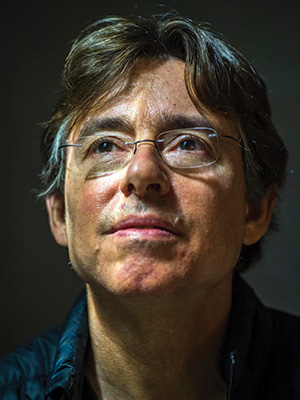
Peter Houk is the longstanding Artistic Director of the MIT Glass Lab. He, alongside Professor Michael Cima, faculty director of the MIT Glass Lab, have shaped and fostered a thriving Glass Lab program. He has guided the program through a major expansion which more than doubled the number of students served. In addition to a steady expansion of class offerings, he has prioritized the support of student interdisciplinary projects. The results of these projects include; G3DP, the first hot glass 3D printing platform using fused deposition modeling, or FDM; VirtualGlass, a free glass modeling software program developed with CSAIL Professor Erik Demaine; and the MIT Glass Band.
Peter is well known for his blown and painted vessels as well as his larger architectural glass projects. His works are in numerous public and private collections including the Corning Museum of Glass, The American Museum of Glass and the Tacoma Museum of Glass. He received his BA from Oberlin College in 1980, and an MA from Tufts University and the School of the Museum of Fine Arts in 1986.

Michael Stern is an artist, designer and engineer who combines traditional craftsmanship with digital design. Co-inventor of the world’s first 3D glass printer, he holds a degree in Mechanical Engineering from the Massachusetts Institute of Technology (MIT). His career is both technological and creative. As part of MIT’s Mediated Matter Group, he co-developed additive manufacturing systems for optically transparent glass. In 2022, he launched Evenline, a studio dedicated to digital glass, where he leads a team exploring new possibilities in design, sculpture, architecture and lighting. Fascinated by algorithmically designed surfaces and the reuse of recycled glass, he continues to push the boundaries of this medium. As an artist, he works at the intersection of traditional glassmaking and contemporary digital design. His practice navigates between material science and expressive form, demonstrating how computational methods enrich artistic practice and technical innovation. Michael is Professor of Practice at the Rochester Institute of Technology where he co-teaches “Digital Glass”, a course focused on the design and creation of glass objects through digital modeling, moldmaking and 3D printing. He holds four patents and has published nine peer-reviewed papers. His work has been exhibited in museums internationally, including the Cooper-Hewitt, MoMA, Fuller Craft Museum, Toledo Museum of Art, and the MIT Museum.
